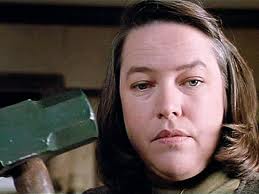
2010 saw some terrific performances. Some ended up with Oscar nominations, but these folks did not. Call them underrated, call them overlooked, whatever you wish. But without a doubt, these are the scene stealers of the year.
Dianne Wiest, Rabbit Hole
I know Nicole Kidman was nominated for an Oscar for this film, but as wonderful as she is, the Academy got it all wrong. The spotlight should have gone to Dianne Wiest. I'm currently watching her in HBO's In Treatment, and am always amazed at her long, storied career as an actress. Glance at her IMDb profile - she's one of the most prolific performers in the business. So when I saw her in Rabbit Hole in which she played Kidman's mom, I was moved to tears. She grieved along with her daughter for the untimely loss of her grandson. But privately, her wounds reopened from the loss of her own son years earlier. It's a magnificent, deeply felt performance, unjustly ignored during awards time.
Pete Postlethwaite, The Town
I learned of Postlethwaite's death shortly after seeing this film and I took it harder than I expected. I admired him as an actor (In The Name of the Father is big favorite of mine), and I am in awe of his performance as mob boss Fergie. The way he sheathed those stems... Man, I was never more frightened by a florist in my life. The loss of Postlethwaite is a huge one for Hollywood but at least we have films like The Town to remind us how good he was.
Ruth Sheen, Another Year
Despite appearing in more than 50 titles, Ruth Sheen is a fresh face to me. A unusual face, for sure, but one that the camera just absolutely adores. She's breathtaking in Another Year where she plays the doting wife of Jim Broadbent (a perfectly matched couple, if I ever saw one). Not only does Sheen look the part, but she acts so effortlessly as an intelligent woman who clearly knows that she's a lucky lady. Some friends have it rough in life - with love, with money, with happiness. Sheen takes one look at her hubby in their homey, lived-in flat, and she's more than content. She just lives in bliss.
Ryan Reynolds, Buried
I've always liked Ryan Reynolds. He's not just a pretty face. His self-deprecating humor never fails to amuse me, and he has made middling films instantly watchable (The Proposal, Definitely, Maybe, The Nines). Reynolds always better than the material he is given. That is, until Buried came along. He rose to the challenge of anchoring a very difficult should-have-failed thriller about a man fighting his way out of a coffin. Not unlike Tom Hanks in Castaway, he manages to hold your attention while being the only actor on screen. That takes considerable charm and skill. Reynolds has been a star on the rise for some time now but this is the film that should put him right to the top.
Jonah Hill, Cyrus and Get Him To The Greek
Jonah Hill surprised the hell out of me this year. I was never really a fan of his. He had the same mannerisms in all of his films, essentially playing the same role over and over again. So imagine my surprise after I saw these two wildly different films this year. Get Him To The Greek was one of the funnier comedies to come out last summer and while Russell Brand was responsible for half of those laughs, Jonah Hill was just as successful as the film's hapless straight man. Pairing these unlikely guys together was a clever and inspired move. As for Cyrus, he delivered his most dramatic performance to date. He bounced off wonderfully with John C. Reilly as they navigated through a nasty territorial war to win the attention of Marisa Tomei. Hill certainly stretched this year and the results were positively enlightening.
Bill Murray, Get Low
Get Low was supposed to be a showcase for the legendary Robert Duvall, who was pitch perfect as an old coot who wants to attend his own funeral. But Get Low had an ace up its sleeve with Bill Murray, who played the funeral director. Discovering new talent is one thing, but rediscovering an old pro is just as rewarding. Murray had always been great at comedy (Quick Change, Ghostbusters, Groundhog Day), but when he does his rare foray into drama, you are taken back by how moving he can be. Like in Lost in Translation, you discover his warm soul beneath those brown eyes. Get Low is Duvall's film to own but Murray gives it much needed heart.
Andy Garcia, City Island
There's nothing showy or awards-worthy about Andy Garcia's performance in City Island. It stands out for me because it has been years - and I mean years! - since I've seen how charming of an actor he can be with the right material. Sure, he had solid bit parts here and there over the years but rarely is he as genial and pleasant and wonderful as he is here. City Island is a delightful comedy about a dysfunctional Noo Yawk family and Garcia, as the frustrated actor-wannabe patriarch, made me feel right at home.
Stanley Tucci and Patricia Clarkson, Easy A
Easy A was a surprise winner of 2010. Not only was it one of the brighter comedies of the year, but it made money, was critically acclaimed and catapulted rising star Emma Stone into a hot commodity. I didn't love it, but I certainly welcomed its bite and comedic delivery. The best thing about Easy A is not the charming Stone herself but her extremely loose and liberal parents, as played with perfection by character actor stalwarts Patricia Clarkson and Stanley Tucci. These two performers are everywhere as of late and without question they light up every film they are in. Easy A is no exception. In fact, they are so effortlessly charming together that I demand the Hollywood gods to couple them in their own movie and in leading roles, no less.
Greta Gerwig, Greenberg
Greenberg is a low key charmer that features a surprisingly potent performance by newcomer Greta Gerwig. For the role of Florence, house/dog sitter and amateur singer, director Noah Baumbach plucked the virtually unknown Gerwig from obscurity and she ran away with the film. Florence is a slightly dim but big-hearted woman who catches the eye of the reclusive Roger (Ben Stiller). Gerwig is a wonderful discovery who more than holds her own against Stiller, Jennifer Jason Leigh and Rhys Ifans. I can't wait to see what she does next.
Al Pacino, You Don't Know Jack
OK, I'm cheating a bit. Al Pacino won an Emmy and a Golden Globe, so his role as Jack Kevorkian is not exactly overlooked. The movie aired on cable so therefore it got a lower profile and that just gets my goat. Why are cable movies considered to be lower on the totem pole of entertainment? The Academy of Motion Pictures and Sciences needs to begin recognizing the great work that is produced on television. Put simply, Pacino's Kevorkian is one of the best things that he has ever done. Pacino is never consistent but when swings for the fences and hits, it's a remarkable thing to witness. The movie, as directed beautifully and delicately by Barry Levinson, is pretty great. Made for TV or not, a great film is a great film. John Goodman, Susan Sarandon, and Brenda Vaccaro provide terrific support but this is Pacino's film all the way. I will never think of Kevorkian the same way again. Ditto for Al Pacino.
Thursday, July 28, 2011
Friday, July 22, 2011
The Greats: Harold & Kumar Go To White Castle
Rich over at Wide Screen World has come up with a clever meme called My Hometown Blogathon. The task: write about a film that takes place in your hometown or state. I suppose I could have done an early Kevin Smith film. I grew up about 10 minutes away from the central Jersey towns that were featured in Clerks, Mallrats and Chasing Amy. But I decided to go a different route and revisit a film that is much more personal to me, a film that touches me on a level far deeper than any Kevin Smith movie. Yes, I'm talking about Harold & Kumar Go to White Castle (2004).
Full disclosure: I never smoked pot, and I never liked White Castle. I never travelled across the state of New Jersey to satisfy a severe case of the munchies. However, there are a lot of reasons why this film is so special to me. So pull down those trousers, grab the nose-hair scissors and let's go trim our pubes.
Dude, am I really high, or is this actually working?!
I was born and raised in a town called Freehold, located squarely in the middle of New Jersey. I was a drama geek in high school, acting in as many plays as I was allowed to. One of my favorite productions was Mary Chase's Harvey, the story of a man who befriended an invisible rabbit. Jimmy Stewart played Elwood P. Dowd in the film version and guess who played him on the stage at Freehold Township High School? No, not me. I was Security Guard #2, thank you very much. Dowd was played by a young talented fella by the name of Kalpen Modi.
Or Kumar.
Kal has always been a gifted performer. Every day in practice, he would insist on making us laugh. If there was any one person in that high school who would make it big, it was clearly him.
Side note: Kumar may be his most popular role, but I thought Kal was terrific in The Namesake. Seek it out if you haven't. After a hiatus from acting to work for President Obama, Kal will be heading back to TV this fall for a major role on How I Met Your Mother, reuniting him with the legen-wait for it!-dary Neil Patrick Harris.
Back to Kumar. This is the movie that put him on top and, if you think about it, it should never have worked. On paper, it's nothing more than a stoner comedy filled with dick jokes, racial puns and a coked-up former child actor "playing himself." How on earth did this movie ever succeed?
Did Doogie Howser just steal my fucking car?
The key ingredients are the two leads - Penn and John Cho. The chemistry between these guys is palpable and genuine. Kumar and Harold are hardly alike, but they share a love for weed, White Castle burgers and boobies. Sometimes that's just enough to bring two dudes together and bond them for life. The fact that these two are minorities also strengthens their connection. The film plays with their ethnicities to hilarious effect, making it stand out from the stoner comedies that preceded it (i.e., Dude, Where's My Car, which is clearly an inspiration). The white people in this movie are either racist or insane, while the "foreigners" are portrayed as calm and logical. Subversive stereotyping. That's the hook of Harold & Kumar Go to White Castle. That's what gives this film its "edge."
Yeah... Just because you are hung like a moose doesn't mean you gotta do porn.
Also key to the film's success: New Jersey. The garden state plays a major part in their journey. Our dope heads start off in Hoboken where they live, and after a disastrous detour from Newark where they witness a beating, they finally end up in New Brunswick. Of course when they arrive, they discover that the White Castle they thought was there has been taken over by the Burger Shack (today's special sauce: animal semen!). The closest 24-hour White Castle is now all the way down in Cherry Hill. (That's a lie, by the way. There is no White Castle in Cherry Hill. In fact, the closest White Castle is in Jersey City, a mere 15 minutes from Hoboken. But that wouldn't have made an exciting movie, right?)
So they leave New Brunswick and stop at Princeton where they discover: a big bag of weed, English girls with severe cases of the taco shits, and a group of Asians who worship Harold and the ground he walks on. It's a most fateful of pit stops, I must say.
Harold: ...The universe tends to unfold as it should.
Kumar: What is that? Some fortune cookie?
As they tear out of that college town, they get lost and find themselves in Freehold. My hometown! In fact, the hospital they end up in is called Freehold General Hospital, which is a fictional representation Freehold Area Hospital (now called CentraState) where I was born. I like that Kumar's father and brother worked at this hospital. This informs us that Kumar's family resides in the Freehold area, just like Mr. Penn himself back in the day.After the hospital vignette (where Ryan Reynolds hilariously appears as a nurse who has the hots for Kumar), they are instructed to "get on 33 west, and head south on the Turnpike," and that's exactly right. The writers' attention to geographical detail was satisfying and crucial to my enjoyment of the film.
Though the film gets those details right for the most part, some instances don't make much sense. Seeing Maria (who lives in Hoboken) at a movie theater in Princeton is a bit of stretch, but I'll allow it. What I can't accept, however, is the guys who were beaten in Newark ended up in the Freehold hospital! Now how is that possible? Newark is a good 45 minutes away, so it makes no sense for them to seek care in Freehold (unless, of course, they too got lost on the way to Cherry Hill). And don't get me started on the whole idea of running into the Extreme Sports Punks in every other town in the state. Contrary to the popular belief of the film's writers, there are more than three highways in New Jersey!
But you know what? Harold & Kumar Go To White Castle can have all of the plot holes in the world, and I will still love it. I wanna make sweet love to it like Kumar does with a big bag of weed, and leave love stains alongside NPH in the back of the Camry. I wanna ride that cougar across town in between Roldy and Chocolate Lips. I wanna suck on that shofar with Goldstein and Rosenberg, and join them as they watch Katie Holmes take off her shirt in The Gift. I wanna to be the first to do a reach-around with Freakshow, his hot wife, and the boys. And even though I detest White Castle, I wanna sit with our heroes and watch them devour 30 sliders, 10 orders of fries and 5 large diet cokes.
I'll do it, man. I'll ride with Harold and Kumar in their quest for the best munchies in the glorious state of New Jersey any day of the week.
Dude, on a scale from 1 to 10, 1 being not so extreme and 10 being extremely extreme, I give this a 9.5!
Wednesday, July 20, 2011
Musings Through Filtered Ears #5
A series of random thoughts from a closet Gleek...
Playing Ketchup
When returning from a long vacation, it's tough getting back to the routine of things. Cleaning out the inbox at work, getting the house in order, paying the bills and, more importantly, tackling the stack of Netflix DVDs and clearing the overloaded DVR. If I had known coming home from vacation would be so taxing, I'd stay on vacation!
Ch-ch-ch-change is coming!
It was inevitable and we all saw it coming. I came home to the news that Netflix was splitting up its plans, effective 9/1. We knew that streaming would eventually become its bread and butter. So in order gradually step away from the DVD format, Netflix needed to separate the two entities. Some experts say that Netflix is making this move to push the studios into maximizing their online content, and that they are intentionally forcing out the DVD business. I know this has always been Netflix's plan, that streaming will grow while the disc rentals will eventually become stagnant. While I admire that the folks at Netflix are forward thinkers, not all of us are advancing as quickly as technology is. It's exciting but, at the same time, a little frustrating. I'm not ready to give up the discs!
I was a little disappointed with the price increase but when I did the math, I realized that I'm still getting a helluva sweet deal. I get to watch a ridiculous amount of movies for 20 bucks a month. 80% of my Netflix rentals come from DVDs and it's going to continue to be that way for a while. I enjoy streaming titles on occasion but I don't have the opportunity to do it frequently enough. I have streamed titles on my iPhone during my bus commute from NYC to NJ but with very mixed results. For one, I don't like watching content on a 2" x 3" screen, and I don't care how clear it looks. Secondly, I don't know if it is AT&T's 3G service, but I can't get a smooth picture during some parts of my ride. I get a lot of skipping and the viewing experience is very frustrating to say the least. (That being said, streaming through Wi-Fi works wonderfully and is how it should be. But unless my bus company begins offering Wi-Fi hotspots on their buses, I can't see myself enjoying Netflix's streaming as part of my everyday movie watching.)
I know some people who have never streamed a single title, so why should they have to foot the streaming costs? And vice versa for those who have happily abandoned their DVD players. We should all pay for what we use.
Emmy Nomination Reaction
The Emmy nominations came out last week. A fairly mixed bag, as usual, but I must voice my pleasure of seeing Friday Night Lights nominated for Best Drama. The series just aired its finale on NBC and there is no better parting gift than this well-deserved nod. Connie Britton and Kyle Chandler also walked away with the nods for Best Actress and Actor in a Drama Series. Coach and Mrs. Coach are the heart of this spectacular show and they deserve the spotlight as much as the show itself.
Other Emmy thoughts:
Summer is not supposed to be a season of watching TV. I always looked forward to this season as a reprieve from the deluge of shows clogging up my DVR. Well, not this summer. I'm hooked on a handful of shows when I should be, oh, I don't know, reading a book or something silly like that. I cannot tear myself away from the greatness that is Louie, Men of a Certain Age (RIP, and gone too soon, dammit) and Curb Your Enthusiasm. Those shows are firing on all cylinders this summer. I'm also paying my respects to Rescue Me, which will be laid to rest (finally!) after this summer's run.
But the one show I can't get enough of? The Glee Project. I know! What's gotten into me? A reality show about a group of wanna-be singers/actors vying for a 7-episode guest stint on Glee? It has disaster written all over it. I was prepared to dismiss it immediately. Well, dagnabbit, I was wrong. Foolishly ignorant! The Glee Project is a charming display of talent and nerves. It has more heart and suspense than American Idol ever had. There's nothing mean-spirited about the show; the judges push the kids hard but treats them with respect and dignity. I'm glad I gave it a chance. I'll be sad when it ends next month, but I look forward to seeing the new Glee star next season. My money is on Lindsey.
Playing Ketchup
When returning from a long vacation, it's tough getting back to the routine of things. Cleaning out the inbox at work, getting the house in order, paying the bills and, more importantly, tackling the stack of Netflix DVDs and clearing the overloaded DVR. If I had known coming home from vacation would be so taxing, I'd stay on vacation!
Ch-ch-ch-change is coming!
It was inevitable and we all saw it coming. I came home to the news that Netflix was splitting up its plans, effective 9/1. We knew that streaming would eventually become its bread and butter. So in order gradually step away from the DVD format, Netflix needed to separate the two entities. Some experts say that Netflix is making this move to push the studios into maximizing their online content, and that they are intentionally forcing out the DVD business. I know this has always been Netflix's plan, that streaming will grow while the disc rentals will eventually become stagnant. While I admire that the folks at Netflix are forward thinkers, not all of us are advancing as quickly as technology is. It's exciting but, at the same time, a little frustrating. I'm not ready to give up the discs!
I was a little disappointed with the price increase but when I did the math, I realized that I'm still getting a helluva sweet deal. I get to watch a ridiculous amount of movies for 20 bucks a month. 80% of my Netflix rentals come from DVDs and it's going to continue to be that way for a while. I enjoy streaming titles on occasion but I don't have the opportunity to do it frequently enough. I have streamed titles on my iPhone during my bus commute from NYC to NJ but with very mixed results. For one, I don't like watching content on a 2" x 3" screen, and I don't care how clear it looks. Secondly, I don't know if it is AT&T's 3G service, but I can't get a smooth picture during some parts of my ride. I get a lot of skipping and the viewing experience is very frustrating to say the least. (That being said, streaming through Wi-Fi works wonderfully and is how it should be. But unless my bus company begins offering Wi-Fi hotspots on their buses, I can't see myself enjoying Netflix's streaming as part of my everyday movie watching.)
I know some people who have never streamed a single title, so why should they have to foot the streaming costs? And vice versa for those who have happily abandoned their DVD players. We should all pay for what we use.
Emmy Nomination Reaction
The Emmy nominations came out last week. A fairly mixed bag, as usual, but I must voice my pleasure of seeing Friday Night Lights nominated for Best Drama. The series just aired its finale on NBC and there is no better parting gift than this well-deserved nod. Connie Britton and Kyle Chandler also walked away with the nods for Best Actress and Actor in a Drama Series. Coach and Mrs. Coach are the heart of this spectacular show and they deserve the spotlight as much as the show itself.
Other Emmy thoughts:
- Yay for Modern Family and the entire cast getting nods. Ed O'Neill was snubbed last year, and he deserves the nomination as much as the rest of the clan.
- Nay for completely shutting out Parenthood. An injustice was done here.
- There's a lot I don't watch: Boardwalk Empire, Mad Men, The Good Wife, 30 Rock, so I can't say I have an opinion on them. But even though I don't watch Justified, I'm actually happy for its recognition. Maybe because it's so refreshing to see a low-rated, critically-acclaimed drama getting their first nomination. I'm always rooting for the underdog!
Summer is not supposed to be a season of watching TV. I always looked forward to this season as a reprieve from the deluge of shows clogging up my DVR. Well, not this summer. I'm hooked on a handful of shows when I should be, oh, I don't know, reading a book or something silly like that. I cannot tear myself away from the greatness that is Louie, Men of a Certain Age (RIP, and gone too soon, dammit) and Curb Your Enthusiasm. Those shows are firing on all cylinders this summer. I'm also paying my respects to Rescue Me, which will be laid to rest (finally!) after this summer's run.
But the one show I can't get enough of? The Glee Project. I know! What's gotten into me? A reality show about a group of wanna-be singers/actors vying for a 7-episode guest stint on Glee? It has disaster written all over it. I was prepared to dismiss it immediately. Well, dagnabbit, I was wrong. Foolishly ignorant! The Glee Project is a charming display of talent and nerves. It has more heart and suspense than American Idol ever had. There's nothing mean-spirited about the show; the judges push the kids hard but treats them with respect and dignity. I'm glad I gave it a chance. I'll be sad when it ends next month, but I look forward to seeing the new Glee star next season. My money is on Lindsey.
Tuesday, July 19, 2011
Quick Takes: Cyrus, Another Year, How Do You Know
This crop of films played with my expectations. Appearances can be deceiving. Most often, a film looks better than it is actually is (thanks to snazzy, shiny trailers and/or its attached pedigree), but what about when the film is actually better than it looks? That happened with me and Cyrus last week, but moreover, I had my expectations met and defied in all different ways with the rest of this batch.
When I saw the ads for Cyrus (2010) last year, I dismissed it. I had very little desire to see it. Jonah Hill never did anything for me, and the film's plot seemed familiar and one-note. So what changed my mind? Well, two things: the reviews were mostly positive, which led me to believe that perhaps there is more to the story that I didn't see. I was intrigued - could it be a smarter film than it looked? The other thing that swayed me was my viewing of Get Him To The Greek back in the spring. That movie drastically changed my opinion of Jonah Hill for the better.
I'm very pleased I gave Cyrus a chance. It's a delightful human comedy about a lonely fuck-up (John C. Reilly, king of the lonely fuck-ups) who falls for a single mom (Marisa Tomei, who never fails to shine). Finally, he catches a break. His years of wallowing in self-pity and relying on his ex-wife for comfort can finally come to an end. Of course, as with dating all single parents, they come with baggage. In this case, it's her adult son who has quite a bit of trouble escaping his mother's womb. In a shallow film, it would have been easy to go for cheap laughs as Reilly and Hill butt heads to win the affections of Tomei, but Cyrus digs deeper. The script's pacing allowed time for these skilled actors to bring nuances and neat little touches to their characters. It's an awkward, sitcom-ish setup (which turned me off to the film in the first place), but thankfully, it was given the deft, thoughtful indie-film treatment. 4/5
Of course, you almost always know what you're getting into when you watch a Mike Leigh film. Another Year (2010) has been on my must-rent list since it came out last fall, and when I finally sat down and watched it, I instantly fell for its charm. It's a simple story centered around a couple in their 60's (Jim Broadbent and Ruth Sheen). They are near retirement, but they seem to be in no rush to quit their jobs. They love what they do and they are blissfully happy with their life together. The film unfolds in the course of a typical year where friends and family stop in, stay a while, drink some tea, chat up a bit and carry on. On paper, it doesn't exactly provide goosebumps but its execution is truly and utterly delightful. Broadbent is as good as he's ever been (and that's saying a lot because, well, he's always good), but Sheen is a sight to behold. I'd never seen her before and she presents herself with such a relaxed, assured demeanor. She's a strong woman, her beliefs and opinions held tightly, her loved ones held even tighter. Lesley Manville received many accolades for her performance here as Sheen's flighty coworker and deservedly so, but any time that was spent away from Broadbent and especially Sheen (which, thankfully, was not often), I was aching for more of them. Another Year is a magnificent entry in the ever-esteemed Mike Leigh canon of greats. 4.5/5
As for James L. Brooks, well, you never know what you are going to get with him. He's created such great, indelible films (Broadcast News, As Good As It Gets) and produced some memorable television (Taxi, Mary Tyler Moore Show), but also has I'll Do Anything and Spanglish on his resume (for the record, I do think Spanglish is underrated, but is still leagues away from the best of Brooks). Thanks to poor reviews and word of mouth, I had my expectations low for How Do You Know (2010) and, frankly, I should have made them lower. This is easily the most lifeless film he's ever made.
Brooks had so much for going for this movie. He assembled a superb cast of actors who are not short on charm or skill. So why didn't it work? The clear answer is the lousy screenplay. It's overbaked and about as deep as your newspaper's astrology section. Everything about it just felt completely superficial. Reese Witherspoon plays a successful softball player who finds herself off the team because (gasp!) her age. While I'm sure this inevitably happens to all athletes, I somehow don't think they would find themselves out of a job as quickly as Lisa did. Is she really that deluded? Did she not see this coming? In the meantime, Paul Rudd is the president of a company that is owned by his father (Jack Nicholson), and when a scandal emerges, Rudd completely falls apart. Now, this is why Rudd was cast in this role in the first place -- he plays the "falling apart" credo very, very well. Now, how a character like George ever managed to run a business in the first place is one of the film's glaring mysteries. And Nicholson completely phones this one in. Yes, Brooks doesn't give him anything to work with, but an actor like Nicholson should be able to do something with it. He clearly chose not to. It's a complete waste of talent for all above.
Only Owen Wilson, arguably the least successful actor of this cast, comes out with his dignity intact. He provides some very solid laughs playing a clueless bachelor who thinks he has it all figured it out. It's clear that Wilson is having a good time with this role, while the rest of the cast sleepwalks its way through a screenplay that simply does not come together. 1.5/5
When I saw the ads for Cyrus (2010) last year, I dismissed it. I had very little desire to see it. Jonah Hill never did anything for me, and the film's plot seemed familiar and one-note. So what changed my mind? Well, two things: the reviews were mostly positive, which led me to believe that perhaps there is more to the story that I didn't see. I was intrigued - could it be a smarter film than it looked? The other thing that swayed me was my viewing of Get Him To The Greek back in the spring. That movie drastically changed my opinion of Jonah Hill for the better.
I'm very pleased I gave Cyrus a chance. It's a delightful human comedy about a lonely fuck-up (John C. Reilly, king of the lonely fuck-ups) who falls for a single mom (Marisa Tomei, who never fails to shine). Finally, he catches a break. His years of wallowing in self-pity and relying on his ex-wife for comfort can finally come to an end. Of course, as with dating all single parents, they come with baggage. In this case, it's her adult son who has quite a bit of trouble escaping his mother's womb. In a shallow film, it would have been easy to go for cheap laughs as Reilly and Hill butt heads to win the affections of Tomei, but Cyrus digs deeper. The script's pacing allowed time for these skilled actors to bring nuances and neat little touches to their characters. It's an awkward, sitcom-ish setup (which turned me off to the film in the first place), but thankfully, it was given the deft, thoughtful indie-film treatment. 4/5
Of course, you almost always know what you're getting into when you watch a Mike Leigh film. Another Year (2010) has been on my must-rent list since it came out last fall, and when I finally sat down and watched it, I instantly fell for its charm. It's a simple story centered around a couple in their 60's (Jim Broadbent and Ruth Sheen). They are near retirement, but they seem to be in no rush to quit their jobs. They love what they do and they are blissfully happy with their life together. The film unfolds in the course of a typical year where friends and family stop in, stay a while, drink some tea, chat up a bit and carry on. On paper, it doesn't exactly provide goosebumps but its execution is truly and utterly delightful. Broadbent is as good as he's ever been (and that's saying a lot because, well, he's always good), but Sheen is a sight to behold. I'd never seen her before and she presents herself with such a relaxed, assured demeanor. She's a strong woman, her beliefs and opinions held tightly, her loved ones held even tighter. Lesley Manville received many accolades for her performance here as Sheen's flighty coworker and deservedly so, but any time that was spent away from Broadbent and especially Sheen (which, thankfully, was not often), I was aching for more of them. Another Year is a magnificent entry in the ever-esteemed Mike Leigh canon of greats. 4.5/5
As for James L. Brooks, well, you never know what you are going to get with him. He's created such great, indelible films (Broadcast News, As Good As It Gets) and produced some memorable television (Taxi, Mary Tyler Moore Show), but also has I'll Do Anything and Spanglish on his resume (for the record, I do think Spanglish is underrated, but is still leagues away from the best of Brooks). Thanks to poor reviews and word of mouth, I had my expectations low for How Do You Know (2010) and, frankly, I should have made them lower. This is easily the most lifeless film he's ever made.
Brooks had so much for going for this movie. He assembled a superb cast of actors who are not short on charm or skill. So why didn't it work? The clear answer is the lousy screenplay. It's overbaked and about as deep as your newspaper's astrology section. Everything about it just felt completely superficial. Reese Witherspoon plays a successful softball player who finds herself off the team because (gasp!) her age. While I'm sure this inevitably happens to all athletes, I somehow don't think they would find themselves out of a job as quickly as Lisa did. Is she really that deluded? Did she not see this coming? In the meantime, Paul Rudd is the president of a company that is owned by his father (Jack Nicholson), and when a scandal emerges, Rudd completely falls apart. Now, this is why Rudd was cast in this role in the first place -- he plays the "falling apart" credo very, very well. Now, how a character like George ever managed to run a business in the first place is one of the film's glaring mysteries. And Nicholson completely phones this one in. Yes, Brooks doesn't give him anything to work with, but an actor like Nicholson should be able to do something with it. He clearly chose not to. It's a complete waste of talent for all above.
Only Owen Wilson, arguably the least successful actor of this cast, comes out with his dignity intact. He provides some very solid laughs playing a clueless bachelor who thinks he has it all figured it out. It's clear that Wilson is having a good time with this role, while the rest of the cast sleepwalks its way through a screenplay that simply does not come together. 1.5/5
Thursday, July 14, 2011
Virgin Vintage Viewings: The Third Man
Virgin Vintage Viewings is a series in which we view older well-known/classic films for the first time.
In my four years of studying film at Emerson College, I can't believe I never saw Carol Reed's The Third Man (1949). This is a film that is studied, dissected, and appreciated by film enthusiasts and scholars. Everything about The Third Man begs discussion.
For starters, the gorgeous look of the film can be credited to director Reed (who, from what I gathered in my research, is an under appreciated filmmaker of the 40's and 50's) and his cinematographer, Robert Krasker. They used oblique angles, sharp lighting, and deep shadows to great effect here, beautifully illuminating Vienna's darkest corners. They even had the daunting task of making the underground sewer system a gorgeous sight to behold. I'm also always impressed when a film looks like it was made far ahead of its time.
I knew absolutely nothing about The Third Man going in, except that Orson Welles played a fellow by the name of Harry Lime. So when Joseph Cotten was investigating the death of Lime, I knew he wasn't dead. After all, Welles got top billing. I was surprised, however, to see Welles pop up no earlier than the 65-minute mark. Harry Lime is one of the most iconic movie characters of all time, and he's barely in the film! Needless to say, I was captivated by his charming appearance. His famous entrance, with the cat nuzzling beside his feet under the door frame in the alleyway, is gorgeously cinematic. This brief scene is movie magic; the way Welles' face lights up, Cotten's delayed reaction, and then that smile... that smile that only a movie star can deliver.
To better understand where I'm coming from, I haven't seen any of Orson Welles' films except for Citizen Kane (which, ironically enough, was covered ad nauseum during my film studies). I wasn't a big fan of Kane, though I did admire Welles' unique vision and passion. The camera loves him. He's not beautiful like Cary Grant, but he has a face that's impossible to ignore.
As for Joseph Cotten, he performs adequately enough, but I wasn't overly impressed by his range. I heard Jimmy Stewart was an early candidate for the part. Now him I would liked to have seen! Maybe I would have appreciated Cotten more if I had known where Holly Martins was coming from. I was suspicious of him for a while, perhaps from my experience of watching movies where nothing is what it seems. I'm sure people were left wondering, "Who is Harry Lime?", but I wanted to know a little more about that amateur noir writer with a most unusual first name for a man.
I should also point out how much I greatly admired that final shot. Man, how marvelous would it have been to see that on the big screen. The best thing about The Third Man, in my virgin eyes, is how everything is framed. Watching Anna Schmidt walk past Holly Martins and beyond the camera was just pitch perfect. Visually, tonally and emotionally.
I was left with a few questions as the film ended. Like, why did Lime lure Martins to Vienna in the first place? Did Lime want him snooping around? And how exactly are Dr. "Vinkel" and Popescu involved in this? Clearly, they are working with Lime but to what extent? I'm sure after repeated viewings and further research, I'll have my answers.
I'm not familiar enough with the film noir genre to determine where The Third Man fits in that giant canon of greats (this film is usually uttered in the same breath as The Killing, Touch of Evil, even Casablanca, but I'll leave that dissertation to my buddy Pete, the noir aficionado that he is). But on its own merits, The Third Man is a movie lover's delight.
In my four years of studying film at Emerson College, I can't believe I never saw Carol Reed's The Third Man (1949). This is a film that is studied, dissected, and appreciated by film enthusiasts and scholars. Everything about The Third Man begs discussion.
For starters, the gorgeous look of the film can be credited to director Reed (who, from what I gathered in my research, is an under appreciated filmmaker of the 40's and 50's) and his cinematographer, Robert Krasker. They used oblique angles, sharp lighting, and deep shadows to great effect here, beautifully illuminating Vienna's darkest corners. They even had the daunting task of making the underground sewer system a gorgeous sight to behold. I'm also always impressed when a film looks like it was made far ahead of its time.
I knew absolutely nothing about The Third Man going in, except that Orson Welles played a fellow by the name of Harry Lime. So when Joseph Cotten was investigating the death of Lime, I knew he wasn't dead. After all, Welles got top billing. I was surprised, however, to see Welles pop up no earlier than the 65-minute mark. Harry Lime is one of the most iconic movie characters of all time, and he's barely in the film! Needless to say, I was captivated by his charming appearance. His famous entrance, with the cat nuzzling beside his feet under the door frame in the alleyway, is gorgeously cinematic. This brief scene is movie magic; the way Welles' face lights up, Cotten's delayed reaction, and then that smile... that smile that only a movie star can deliver.
To better understand where I'm coming from, I haven't seen any of Orson Welles' films except for Citizen Kane (which, ironically enough, was covered ad nauseum during my film studies). I wasn't a big fan of Kane, though I did admire Welles' unique vision and passion. The camera loves him. He's not beautiful like Cary Grant, but he has a face that's impossible to ignore.
As for Joseph Cotten, he performs adequately enough, but I wasn't overly impressed by his range. I heard Jimmy Stewart was an early candidate for the part. Now him I would liked to have seen! Maybe I would have appreciated Cotten more if I had known where Holly Martins was coming from. I was suspicious of him for a while, perhaps from my experience of watching movies where nothing is what it seems. I'm sure people were left wondering, "Who is Harry Lime?", but I wanted to know a little more about that amateur noir writer with a most unusual first name for a man.
I should also point out how much I greatly admired that final shot. Man, how marvelous would it have been to see that on the big screen. The best thing about The Third Man, in my virgin eyes, is how everything is framed. Watching Anna Schmidt walk past Holly Martins and beyond the camera was just pitch perfect. Visually, tonally and emotionally.
I was left with a few questions as the film ended. Like, why did Lime lure Martins to Vienna in the first place? Did Lime want him snooping around? And how exactly are Dr. "Vinkel" and Popescu involved in this? Clearly, they are working with Lime but to what extent? I'm sure after repeated viewings and further research, I'll have my answers.
I'm not familiar enough with the film noir genre to determine where The Third Man fits in that giant canon of greats (this film is usually uttered in the same breath as The Killing, Touch of Evil, even Casablanca, but I'll leave that dissertation to my buddy Pete, the noir aficionado that he is). But on its own merits, The Third Man is a movie lover's delight.
Monday, June 27, 2011
Hidden Treasure: Dolores Claiborne
Sometimes being a bitch is all a woman has to hang on to....
A few weeks ago, I saw a small Dustin Hoffman movie called Straight Time, which was released in 1978. In the film, there is an appearance by a young, slim Kathy Bates. She was the youngest I'd ever seen her, and though the role was brief, she had a very commanding presence. She had two pivotal scenes in the film, and she nailed the part. If I had seen Straight Time when it was released that year, I'd be proclaiming that this young up-and-comer named Kathy Bates was going to be a star.
And boy, what an incredible career this woman has had. She beautifully bared it all in About Schmidt. She got me all teary eyed in Fried Green Tomatoes (Go ahead. Laugh). She scared the cockadoodle bejesus out of me in Misery. She was robbed of an Oscar for Primary Colors. And the list goes on. But Kathy Bates has spent most of her career in supporting roles (she's like a fresh breath of air when she waltzes onto a movie, however briefly). So when she's front and center, we take notice.
One of her best roles - leading or otherwise - is that of Dolores Claiborne. The film of the same name flew under the radar when it was released in 1995. It was mildly praised by critics and barely made a dent in the box office. Backed by a remarkable cast, including Christopher Plummer, David Strathairn, Jennifer Jason Leigh, and a fresh-faced John C. Reilly, this Tony Gilroy-penned adaptation of Stephen King's novel was deftly helmed by underrated director Taylor Hackford. Dolores Claiborne had a remarkable pedigree and it was a damned good movie. So where's the love?
Now, you listen to me, Mr. Grand High Poobah of Upper Buttcrack. I'm just about half-past give a shit with your fun and games.
The script can be melodramatic ("Husbands die every day, Dolores"), but subtlety isn't what they are striving for. This is a soap opera, plain and simple. An old, rich woman dies. Dolores is accused of murdering her. The cop (Plummer) is determined to put her in jail for good, something he should have done twenty years ago when Dolores's husband was mysteriously killed. Did she kill her husband? What about the old lady? Dolores's estranged daughter (Leigh) isn't so sure what to feel. She hardly remembers anything about her father's death ("It was just a bad patch!").
The central mystery of the film isn't all that special, but it's how the mystery unfolds that makes Dolores Claiborne a terrific piece of entertainment. Hackford and Gilroy weave flashbacks within flashbacks with incredible finesse. It doesn't feel forced; every reveal occurs naturally. Also, the film visually pops out at you. It's gorgeously lit, and Hackford subtly uses digital effects for flashback transitions. The effect is hypnotizing; you are drawn into the story as it takes you through time.
The cast elevates the film to a whole new level. I mentioned how good of an actress Kathy Bates is. But Dolores Claiborne ranks up there as one of her most indelible characters, alongside Annie Wilkes and Libby Holden. It's no surprise that King wrote the book with Bates in mind. Dolores is bitter and resentful ("If you wanna know what kind of life a person had, just look at their hands"), but also headstrong and logical. Her daughter Selena is very similar-minded, yet they clash over what's mostly unsaid between the two. The past has kept them apart. It's a complex relationship, filled with dark secrets but little regrets.
It's surprising that the book and screenplay were written by men. Dolores Claiborne is very much a female-driven character piece. The third pivotal female role is Vera Davenport (played wonderfully by stage actress Judy Parfitt), a woman not quite who we assume to be. Like with Dolores and Selena, the layers of her traits are revealed slowly as the film drives toward its memorable conclusion.
Even though these women are the anchors of this film, the men, while more broadly drawn, are portrayed so well by the actors who embody them. Plummer is so good here as a detective driven by the need to close his only unresolved case. Strathairn is more one note (since his scenes are colored from the perspective of Dolores), but he fills the role with great anger and gruffness.
Dolores Claiborne is a change of pace for Stephen King. Like Shawshank, or The Green Mile, it's not the typical horror story you would expect from him. But there are glimpses of the master at work in this story. When Dolores shouted at her husband during a heated argument: "That's the last time you will ever hit me. Next time, one of us is going to the bone yard." That line there is unmistakably King.
A few weeks ago, I saw a small Dustin Hoffman movie called Straight Time, which was released in 1978. In the film, there is an appearance by a young, slim Kathy Bates. She was the youngest I'd ever seen her, and though the role was brief, she had a very commanding presence. She had two pivotal scenes in the film, and she nailed the part. If I had seen Straight Time when it was released that year, I'd be proclaiming that this young up-and-comer named Kathy Bates was going to be a star.
And boy, what an incredible career this woman has had. She beautifully bared it all in About Schmidt. She got me all teary eyed in Fried Green Tomatoes (Go ahead. Laugh). She scared the cockadoodle bejesus out of me in Misery. She was robbed of an Oscar for Primary Colors. And the list goes on. But Kathy Bates has spent most of her career in supporting roles (she's like a fresh breath of air when she waltzes onto a movie, however briefly). So when she's front and center, we take notice.
One of her best roles - leading or otherwise - is that of Dolores Claiborne. The film of the same name flew under the radar when it was released in 1995. It was mildly praised by critics and barely made a dent in the box office. Backed by a remarkable cast, including Christopher Plummer, David Strathairn, Jennifer Jason Leigh, and a fresh-faced John C. Reilly, this Tony Gilroy-penned adaptation of Stephen King's novel was deftly helmed by underrated director Taylor Hackford. Dolores Claiborne had a remarkable pedigree and it was a damned good movie. So where's the love?
Now, you listen to me, Mr. Grand High Poobah of Upper Buttcrack. I'm just about half-past give a shit with your fun and games.
The script can be melodramatic ("Husbands die every day, Dolores"), but subtlety isn't what they are striving for. This is a soap opera, plain and simple. An old, rich woman dies. Dolores is accused of murdering her. The cop (Plummer) is determined to put her in jail for good, something he should have done twenty years ago when Dolores's husband was mysteriously killed. Did she kill her husband? What about the old lady? Dolores's estranged daughter (Leigh) isn't so sure what to feel. She hardly remembers anything about her father's death ("It was just a bad patch!").
The central mystery of the film isn't all that special, but it's how the mystery unfolds that makes Dolores Claiborne a terrific piece of entertainment. Hackford and Gilroy weave flashbacks within flashbacks with incredible finesse. It doesn't feel forced; every reveal occurs naturally. Also, the film visually pops out at you. It's gorgeously lit, and Hackford subtly uses digital effects for flashback transitions. The effect is hypnotizing; you are drawn into the story as it takes you through time.
The cast elevates the film to a whole new level. I mentioned how good of an actress Kathy Bates is. But Dolores Claiborne ranks up there as one of her most indelible characters, alongside Annie Wilkes and Libby Holden. It's no surprise that King wrote the book with Bates in mind. Dolores is bitter and resentful ("If you wanna know what kind of life a person had, just look at their hands"), but also headstrong and logical. Her daughter Selena is very similar-minded, yet they clash over what's mostly unsaid between the two. The past has kept them apart. It's a complex relationship, filled with dark secrets but little regrets.
It's surprising that the book and screenplay were written by men. Dolores Claiborne is very much a female-driven character piece. The third pivotal female role is Vera Davenport (played wonderfully by stage actress Judy Parfitt), a woman not quite who we assume to be. Like with Dolores and Selena, the layers of her traits are revealed slowly as the film drives toward its memorable conclusion.
Even though these women are the anchors of this film, the men, while more broadly drawn, are portrayed so well by the actors who embody them. Plummer is so good here as a detective driven by the need to close his only unresolved case. Strathairn is more one note (since his scenes are colored from the perspective of Dolores), but he fills the role with great anger and gruffness.
Dolores Claiborne is a change of pace for Stephen King. Like Shawshank, or The Green Mile, it's not the typical horror story you would expect from him. But there are glimpses of the master at work in this story. When Dolores shouted at her husband during a heated argument: "That's the last time you will ever hit me. Next time, one of us is going to the bone yard." That line there is unmistakably King.
Friday, June 24, 2011
Just one more thing, Mr. Falk....
1927-2011
"When I was your age, television was called books. And this is a special book. It was the book my father used to read to me when I was sick, and I used to read it to your father. And today I'm gonna read it to you...."
--Grandpa in "The Princess Bride"
Thursday, June 23, 2011
Quick Takes: Super 8
We are more than halfway into 2011 and this past weekend I had the pleasure of seeing my second '11 film in a theater. The first was back in March for The Adjustment Bureau, which I enjoyed, and I'm happy to report that Super 8 (2011) puts me at two for two. I don't go to the movies often, so I'm always happy when I make the effort to go and it's not a stinker.
Many said Super 8 resembled some of Spielberg's earlier works (Close Encounters, E.T.), but for me, The Goonies (a Spielberg production, oddly enough) is the closest movie that mirrors the energy and spirit of Super 8, and that's a huge compliment. These kids are hungry for adventure; instead of having one last Goonie hunt, these guys just want to make a good zombie movie. They are genuinely frightened by the events that follow, and while they bicker endlessly, they share a deep affection for one another. There's even a love triangle. It's all very reminiscent of that '85 Richard Donner classic, though Super 8 doesn't quite make that perfect landing.
I have some problems: Remember Chunk? Data? Brand? Mama Fratelli? Of course you do. Now, name at least 4 characters in Super 8. Exactly. These characters are very thin, distinguishable mostly by physical characteristics. With the exception of Joe Lamb (Joel Courtney) and Alice (Elle Fanning), I don't think the kids were well-cast. Sure, they are given funny bits of dialogue and imbue a terrific sense of camaraderie, but it was not enough to make them stick with you forever. And as much as I love seeing Friday Night Lights' Kyle Chandler as Joe's dad (and Abrams certainly loves filming him, zooming closely on his face on many occasions), the role he plays feels shallow. Even Noah Emmerich's villainous government operative is a stock figure. I was really hoping J.J. Abrams filmed a scene where we meet Nelec's mentally unstable and disfigured rocky-road-ice-cream-loving brother.
Another problem: the special effects weren't so special. I wasn't impressed with the train wreck. It was overkill. I understand it was supposed to be a big enough crash to unleash the film's mystery element, but I felt it was a bit excessive with all that flying debris. And that big reveal? It's not so much that the creature was disappointing, but it just felt out of place. I know it's a monster movie, but I preferred it when the monster's presence was disguised and low key. The movie was not all about the monster, and that's when it clicked the most.
The film showcases a time of innocence and wonder, a throwback to an era we all remember fondly. Despite my problems with the film, Super 8 was deeply engaging, quickly paced, and had many scenes filled with heart. What makes it stand out is that it's sweetly soaked in nostalgia. 3.5/5
Many said Super 8 resembled some of Spielberg's earlier works (Close Encounters, E.T.), but for me, The Goonies (a Spielberg production, oddly enough) is the closest movie that mirrors the energy and spirit of Super 8, and that's a huge compliment. These kids are hungry for adventure; instead of having one last Goonie hunt, these guys just want to make a good zombie movie. They are genuinely frightened by the events that follow, and while they bicker endlessly, they share a deep affection for one another. There's even a love triangle. It's all very reminiscent of that '85 Richard Donner classic, though Super 8 doesn't quite make that perfect landing.
I have some problems: Remember Chunk? Data? Brand? Mama Fratelli? Of course you do. Now, name at least 4 characters in Super 8. Exactly. These characters are very thin, distinguishable mostly by physical characteristics. With the exception of Joe Lamb (Joel Courtney) and Alice (Elle Fanning), I don't think the kids were well-cast. Sure, they are given funny bits of dialogue and imbue a terrific sense of camaraderie, but it was not enough to make them stick with you forever. And as much as I love seeing Friday Night Lights' Kyle Chandler as Joe's dad (and Abrams certainly loves filming him, zooming closely on his face on many occasions), the role he plays feels shallow. Even Noah Emmerich's villainous government operative is a stock figure. I was really hoping J.J. Abrams filmed a scene where we meet Nelec's mentally unstable and disfigured rocky-road-ice-cream-loving brother.
Another problem: the special effects weren't so special. I wasn't impressed with the train wreck. It was overkill. I understand it was supposed to be a big enough crash to unleash the film's mystery element, but I felt it was a bit excessive with all that flying debris. And that big reveal? It's not so much that the creature was disappointing, but it just felt out of place. I know it's a monster movie, but I preferred it when the monster's presence was disguised and low key. The movie was not all about the monster, and that's when it clicked the most.
The film showcases a time of innocence and wonder, a throwback to an era we all remember fondly. Despite my problems with the film, Super 8 was deeply engaging, quickly paced, and had many scenes filled with heart. What makes it stand out is that it's sweetly soaked in nostalgia. 3.5/5
Tuesday, June 21, 2011
The 5 Best: Stephen King Movie Adaptations
Stephen King has a very interesting relationship with Hollywood. The industry has taken his vast collection of short stories and novels, and produced a few masterpieces, dozens of halfway-decent fare, and a whole lot of shit. When I was sorting through the catalog of his movie adaptations (including those made for TV), I counted at least 50 titles. And that's not counting King's original material, a la Cat's Eye, or the well-received mini-series Kingdom Hospital, or direct-to-video sequels to unworthy films (Children of the Corn III: Urban Harvest, anyone?).
Like I said, there are a lot of crappy movies (The Lawnmower Man, Maximum Overdrive, Dreamcatcher, just to name a few) and a handful of just-okay stuff (The Dead Zone, Firestarter, Apt Pupil, Hearts in Atlantis). But I was surprised by the hefty amount of pretty decent films. For instance, TV has been good to him. I really admired the string of miniseries that ran in the early-to-mid 90's on ABC. The Stand, It, The Langoliers, The Shining -- all very entertaining with low budgets, solid casts, and somewhat faithful retellings of King's more popular stories. Speaking of The Shining, I loved Kubrick's version just as much as the TV mini-series (I'm in the minority, I know), but both are unique spins on King's shocking thriller about a writer who terrorizes his family in a hotel. Kubrick's version was a masterwork (and Nicholson was his usual fantastic self), despite the film not being all that faithful to the source. At least the miniseries kept closely to the book, and its leisurely pace allowed for a genuinely suspenseful build-up. I almost had both Shining films at a tie for the fifth slot, but I didn't want to cheat and I couldn't make the sacrifice!
Some of his 80's thrillers still stick with me. Christine, about the car that kills people, and Pet Sematary, about animals coming back from the dead, traumatized me when I was a kid. I had nightmares for years. I haven't revisited them in quite some time, but I doubt they'll hold up. The Running Man was terribly cheesy, but I still can't get over the inspired villainous casting of Richard Dawson of Family Feud fame. That's like having Howie Mandel being chased by Dwayne Johnson. (Do I smell a potential remake?). And I'm probably the only one who totally dug Needful Things, that Ed Harris thriller where he played a sheriff who embattles the devil, played to perfection by Max Von Sydow. JT Walsh, Amanda Plummer, Bonnie Bedelia round out the eclectic cast. Terrific '90's kitsch.
On the more acclaimed side, in addition to leaving out The Shining, I had to take off The Green Mile, which I thought was overrated and by far the weakest of the three collaborations of King and writer/director Frank Darabont. I liked it enough, but it felt very shallow for its long running time. The other title that didn't quite make it: Carrie. DePalma's terrific retelling of King's earliest work would have made my top 10, easily. But alas, I had to draw the line somewhere.
So without further ado, below are my favorite films adapted from the work of one of literature's best novelists.
The Shawshank Redemption (1994, Darabont)
Let's get the obvious one out of the way. This is best of the bunch, by far and large. Based on King's novella, Rita Hayworth and The Shawshank Redemption, this is the first and most fruitful of the magical collaboration between the author and Frank Darabont. This film is just tremendously moving. The plight of the two imprisoned men -- Andy and Red -- is deeply felt and beautifully portrayed by Tim Robbins and Morgan Freeman, respectively, in their career-best performances. If this film was not released in the same year as Forrest Gump and Pulp Fiction, it would have swept the Oscars. Though it walked away empty-handed that night, The Shawshank Redemption has never left our hearts since.
The Mist (2007, Darabont)
One of the best films of 2007. After those final scenes, my jaw was on the floor. It was the ballsiest ending I had ever seen out of a Hollywood production. This was no edgy independent thriller - this was a mid-budget monster movie originally set up at Paramount (who sold it to Dimension, possibly in fear of controversy) and the film just completely drained the blood out of me. King's novella ended ambiguously, but Darabont wanted a finite ending. King approved of the final cut and said The Mist is the most frightening adaptation of his work he had ever seen. I couldn't have said it better.
Stand By Me (1986, Reiner)
The first of another inspired pairing: King and Rob Reiner. Reiner took King's short story (The Body), made it less macabre and more heartfelt, added young up-and-coming actors (Corey Feldman, Jerry O'Connell, River Phoenix, Kiefer Sutherland), sprinkled in a Richard Dreyfuss narration, and stirred. Stand By Me is a wonderful concoction, a tasteful, bittersweet drama. It is the epitome of "coming-of-age" films.
Misery (1990, Reiner)
Reiner again, this time bringing the legendary William Goldman on board to adapt King's frightening and hilarious novel about an obsessed fan who takes things too far. Stephen King knows a thing or two about obsessed fans. Could this have been autobiographical? Is he Paul Sheldon? I wouldn't put the notion past him! The character of Annie Wilkes (played to perfection by Oscar winner Kathy Bates) is quintessential King, one of the best creations in his long list of eccentric personalities. Like Frances McDormand in Fargo 6 years later, it's the perfect role matched with the perfect actress.
Dolores Claiborne (1995, Hackford)
Like Annie Wilkes in Misery, Kathy Bates can thank Stephen King for giving her yet another extraordinary role with Dolores Claiborne. It's a full-bodied performance - one of her best - in a crackling domestic thriller about a disturbed woman accused of murdering her employer. Is she innocent? Does her own estranged daughter (Jennifer Jason Leigh) believe her? David Strathairn is also damned good as Claiborne's dead husband who pops up during flashbacks, which are beautifully orchestrated by director Taylor Hackford. Dolores Claiborne is an underseen, underrated drama, one of the best films to come out from Uncle Stevie's canon of the macabre.
Like I said, there are a lot of crappy movies (The Lawnmower Man, Maximum Overdrive, Dreamcatcher, just to name a few) and a handful of just-okay stuff (The Dead Zone, Firestarter, Apt Pupil, Hearts in Atlantis). But I was surprised by the hefty amount of pretty decent films. For instance, TV has been good to him. I really admired the string of miniseries that ran in the early-to-mid 90's on ABC. The Stand, It, The Langoliers, The Shining -- all very entertaining with low budgets, solid casts, and somewhat faithful retellings of King's more popular stories. Speaking of The Shining, I loved Kubrick's version just as much as the TV mini-series (I'm in the minority, I know), but both are unique spins on King's shocking thriller about a writer who terrorizes his family in a hotel. Kubrick's version was a masterwork (and Nicholson was his usual fantastic self), despite the film not being all that faithful to the source. At least the miniseries kept closely to the book, and its leisurely pace allowed for a genuinely suspenseful build-up. I almost had both Shining films at a tie for the fifth slot, but I didn't want to cheat and I couldn't make the sacrifice!
![]() |
| Max Von Sydow in Needful Things |
On the more acclaimed side, in addition to leaving out The Shining, I had to take off The Green Mile, which I thought was overrated and by far the weakest of the three collaborations of King and writer/director Frank Darabont. I liked it enough, but it felt very shallow for its long running time. The other title that didn't quite make it: Carrie. DePalma's terrific retelling of King's earliest work would have made my top 10, easily. But alas, I had to draw the line somewhere.
So without further ado, below are my favorite films adapted from the work of one of literature's best novelists.
Let's get the obvious one out of the way. This is best of the bunch, by far and large. Based on King's novella, Rita Hayworth and The Shawshank Redemption, this is the first and most fruitful of the magical collaboration between the author and Frank Darabont. This film is just tremendously moving. The plight of the two imprisoned men -- Andy and Red -- is deeply felt and beautifully portrayed by Tim Robbins and Morgan Freeman, respectively, in their career-best performances. If this film was not released in the same year as Forrest Gump and Pulp Fiction, it would have swept the Oscars. Though it walked away empty-handed that night, The Shawshank Redemption has never left our hearts since.
One of the best films of 2007. After those final scenes, my jaw was on the floor. It was the ballsiest ending I had ever seen out of a Hollywood production. This was no edgy independent thriller - this was a mid-budget monster movie originally set up at Paramount (who sold it to Dimension, possibly in fear of controversy) and the film just completely drained the blood out of me. King's novella ended ambiguously, but Darabont wanted a finite ending. King approved of the final cut and said The Mist is the most frightening adaptation of his work he had ever seen. I couldn't have said it better.
The first of another inspired pairing: King and Rob Reiner. Reiner took King's short story (The Body), made it less macabre and more heartfelt, added young up-and-coming actors (Corey Feldman, Jerry O'Connell, River Phoenix, Kiefer Sutherland), sprinkled in a Richard Dreyfuss narration, and stirred. Stand By Me is a wonderful concoction, a tasteful, bittersweet drama. It is the epitome of "coming-of-age" films.
Reiner again, this time bringing the legendary William Goldman on board to adapt King's frightening and hilarious novel about an obsessed fan who takes things too far. Stephen King knows a thing or two about obsessed fans. Could this have been autobiographical? Is he Paul Sheldon? I wouldn't put the notion past him! The character of Annie Wilkes (played to perfection by Oscar winner Kathy Bates) is quintessential King, one of the best creations in his long list of eccentric personalities. Like Frances McDormand in Fargo 6 years later, it's the perfect role matched with the perfect actress.
Like Annie Wilkes in Misery, Kathy Bates can thank Stephen King for giving her yet another extraordinary role with Dolores Claiborne. It's a full-bodied performance - one of her best - in a crackling domestic thriller about a disturbed woman accused of murdering her employer. Is she innocent? Does her own estranged daughter (Jennifer Jason Leigh) believe her? David Strathairn is also damned good as Claiborne's dead husband who pops up during flashbacks, which are beautifully orchestrated by director Taylor Hackford. Dolores Claiborne is an underseen, underrated drama, one of the best films to come out from Uncle Stevie's canon of the macabre.
Thursday, June 16, 2011
Quick Takes: Tron: Legacy, True Grit
Jeff Bridges is certainly enjoying an impressive run these days, isn't he? As a longtime fan of his work, I'm happy he's finally getting due recognition (hello Oscar!) and more solid work. Bridges is no longer a resilient, persistent underdog, but now a force to be reckoned with. Last year alone, he had a dual role in the much anticipated sequel to his underground 80's hit, Tron, and a showy, spectacular performance in the latest venture from the brothers Coen. I had the pleasure of viewing both films this week, and Bridges continues to knock me out. The man is unstoppable.
I know I saw Tron sometime in the 80s (I was 5 when it came out), but I can't remember a lick of it. I went into Tron: Legacy (2010) with trepidation. Would I "get" it? Would it be another sci-fi effects-driven opus that would give me a headache if I tried to figure it out? A half hour into the movie, my fears were gone. Tron: Legacy is surprisingly accessible to newcomers, an easy-going, nimbly-paced adventure about a teenager (Garrett Hedlund, a fantastic presence and a star in the making) in search for his father (Bridges), who has gone missing inside of a super-computer. Sam comes across a digital, younger version of his father (Bridges again, in a technologically groundbreaking performance), who is at war with his real self. No doubt about it, the plot is silly and not without its share of corny sentiment, but it works. Newcomer director Joseph Kosinki has a strong grasp on this material and carried me through the film with ease and skill. Writers Edward Kitsis and Adam Horowitz (best known from me for penning some classic Lost episodes) have a penchant for witty, fun dialogue and not taking the film too seriously.
I had a good time with Tron: Legacy. It looks great, Hedlund has a starry quality about him, and Bridges looks like he's having a ball. It is far from perfect, but what's not to like here? 3.5/5
Bridges again disappears into a showy role as Rooster Cogburn, a character originated on screen by John Wayne back in 1969, in True Grit (2010), the latest effort by movie gods Joel and Ethan Coen. Bridges is barely recognizable under that heavy beard, eye patch and punchy dialogue ("The jakes is occupied!"), but it's an indelible, layered performance, as good as anything he has ever done. Hailee Steinfeld is a remarkable newcomer; like Hedlund in Tron: Legacy, you just know she will be going places. Matt Damon, Josh Brolin and Barry Pepper are as reliably good as you'd expect them to be.
The real star of this vengeance drama, though, is the script. The dialogue is like butter; listening to the exchanges between these characters is the main source of pleasure I got from True Grit. A sample:
Lawyer: So, you say that when Amos Wharton raised his axe, you backed away from him.
Cogburn: That's right.
Lawyer: In what direction were you going?
Cogburn: Backwards. I always go backwards when I back up.
Unsurprisingly, the Coens have a magical way with words. Like Hemingway or Dickens, you just know their voices. True Grit is a remake and an adaptation of a novel, but make no mistake: this is strictly a Coen film. I'm not a fan of westerns, but these guys entertained the hell out of me with this one. 4/5
I know I saw Tron sometime in the 80s (I was 5 when it came out), but I can't remember a lick of it. I went into Tron: Legacy (2010) with trepidation. Would I "get" it? Would it be another sci-fi effects-driven opus that would give me a headache if I tried to figure it out? A half hour into the movie, my fears were gone. Tron: Legacy is surprisingly accessible to newcomers, an easy-going, nimbly-paced adventure about a teenager (Garrett Hedlund, a fantastic presence and a star in the making) in search for his father (Bridges), who has gone missing inside of a super-computer. Sam comes across a digital, younger version of his father (Bridges again, in a technologically groundbreaking performance), who is at war with his real self. No doubt about it, the plot is silly and not without its share of corny sentiment, but it works. Newcomer director Joseph Kosinki has a strong grasp on this material and carried me through the film with ease and skill. Writers Edward Kitsis and Adam Horowitz (best known from me for penning some classic Lost episodes) have a penchant for witty, fun dialogue and not taking the film too seriously.
I had a good time with Tron: Legacy. It looks great, Hedlund has a starry quality about him, and Bridges looks like he's having a ball. It is far from perfect, but what's not to like here? 3.5/5
Bridges again disappears into a showy role as Rooster Cogburn, a character originated on screen by John Wayne back in 1969, in True Grit (2010), the latest effort by movie gods Joel and Ethan Coen. Bridges is barely recognizable under that heavy beard, eye patch and punchy dialogue ("The jakes is occupied!"), but it's an indelible, layered performance, as good as anything he has ever done. Hailee Steinfeld is a remarkable newcomer; like Hedlund in Tron: Legacy, you just know she will be going places. Matt Damon, Josh Brolin and Barry Pepper are as reliably good as you'd expect them to be.
The real star of this vengeance drama, though, is the script. The dialogue is like butter; listening to the exchanges between these characters is the main source of pleasure I got from True Grit. A sample:
Lawyer: So, you say that when Amos Wharton raised his axe, you backed away from him.
Cogburn: That's right.
Lawyer: In what direction were you going?
Cogburn: Backwards. I always go backwards when I back up.
Unsurprisingly, the Coens have a magical way with words. Like Hemingway or Dickens, you just know their voices. True Grit is a remake and an adaptation of a novel, but make no mistake: this is strictly a Coen film. I'm not a fan of westerns, but these guys entertained the hell out of me with this one. 4/5
Tuesday, June 14, 2011
Virgin Vintage Viewings: The Panic in Needle Park and Straight Time
Virgin Vintage Viewings is a series in which we view older well-known/classic films for the first time.
Pairing these two titles was accidental. I chose randomly from my vast queue of unseen gems, and I was struck by how oddly similar they were. At first glance, there is no apparent connection between Ulu Grosbard's Straight Time (1978) and Jerry Shatzberg's The Panic in Needle Park (1971). When I did a little research before writing this up, I did discover a common thread: these are the last films that Dustin Hoffman and Al Pacino starred in, respectfully, before hitting major milestones in their impressive careers. For Hoffman, it was his final film before becoming an Oscar winner (for the heartbreaking Kramer Vs Kramer). For Pacino, he went from Bobby in The Panic in Needle Park to Michael Corleone in The Godfather.
But more to the point, these are two films about the power of addiction. The Panic in Needle Park focuses on a common one: drugs. Pacino broke into Hollywood with this film, a dark, quiet drama about a drug addict who falls for a comely drifter. The two lost souls connect, but when Bobby goes under his drug-induced spell, Helen (Kitty Winn) is alone and miserable. So she begins using - and whoring - in order to be with Bobby through all kinds of altered states. Ain't love grand?
This is a difficult film to watch. Lots of extended scenes and close ups of addicts shooting up, distributing, tricking, robbing, stealing, you name it. The title of the film comes from a period in the 70's where cops were cracking down on drug dealing in NYC, sending addicts to a "panic" in which they'll do anything - and I mean anything - for a fix. Watching the film's two lovebirds careen wildly from happy and energetic to desperate and angry - and back again - grew tiresome and repetitive towards the final act. You can pretty much guess how the film will unfold; it's just inevitable that these people have nothing else to live for. I think Schatzberg knew the fate of Bobby and Helen would be pretty clear, so he did the smart thing: he closed the film two scenes before the end of the story. This actually works because there's nothing more boring than knowing exactly what happens next. Schatzberg didn't need to spell out the obvious.
As tough as this film is to watch, it's remarkable to see what an expressive actor Al Pacino is. This is Pacino making his leading role debut, and what an entrance it is. The man is a legend; Hollywood without Al Pacino is like movie theaters without popcorn. He has made some indelible marks in this industry. Needless to say, he's terrific here, a fresh face and a bundle of nerves.
Kitty Winn also won raves for her performance here. It's a brave, auspicious debut. She only appeared in a few more movies before dropping out of the business altogether. It's a shame. The camera loves her and I think she could have pulled off a wide-ranging career.
If you're going to talk about great actors, though, you can never not mention Dustin Hoffman, an all-time favorite of mine. He's always disappearing into his roles, and he's always on. He is such a transformative actor, a man who consistently creates memorable characters film after film (see: Michael Dorsey/Dorothy Michaels, Ratso Rizzo, Raymond Babbitt, or more recently - and just as brilliantly - Guisseppe Baldini from Perfume: The Story of a Murderer). He's Captain Hook! Mumbles! No wait, he's Lenny Bruce! The man is a chameleon.
Straight Time uncovers a gem of a character: ex-con Max Dembo. He's a small time crook, addicted to the life of crime. But he wants to go straight. He makes an effort: gets a new job, finds his own place, meets a new girl. He's convinced he can turn himself around.
But the influences around him pull him back in. First, his parole officer (the fabulous M. Emmett Walsh, character actor extraordinaire) is a greasy prick who would love nothing more than to see Dembo back behind bars. Walsh resembles authority, and as an outcast who has resisted authority all of his life, it's not easy for Dembo to play by Walsh's rules.
Hanging out with old friends, including the wonderfully cast Gary Busey and Harry Dean Stanton, makes it tough for Dembo to resist the urges of robbing jewelry stores and stealing cars. His new girlfriend, Theresa Russell, resembles the lifestyle he only dreams of, but is she enough to change Dembo for good?
Straight Time is a methodical, slow moving character drama that doesn't focus too much on plot. It asks a simple question: can an ex-convict forever change his ways? Jeffrey Boam's thoughtful script zeroes in on the addictive nature of crime and how easy it can be to revert back to your old ways.
Did these two guys really have a chance at making it straight? Like Bobby over at Needle Park, maybe Dembo's fate was sealed from the start. Straight Time's finale wasn't as cryptic as Needle Park's, as the closing credits showed us that Max Dembo belongs exactly where we left him. Not everyone gets the hopeful reprieve of a cut-to-black.
Pairing these two titles was accidental. I chose randomly from my vast queue of unseen gems, and I was struck by how oddly similar they were. At first glance, there is no apparent connection between Ulu Grosbard's Straight Time (1978) and Jerry Shatzberg's The Panic in Needle Park (1971). When I did a little research before writing this up, I did discover a common thread: these are the last films that Dustin Hoffman and Al Pacino starred in, respectfully, before hitting major milestones in their impressive careers. For Hoffman, it was his final film before becoming an Oscar winner (for the heartbreaking Kramer Vs Kramer). For Pacino, he went from Bobby in The Panic in Needle Park to Michael Corleone in The Godfather.
But more to the point, these are two films about the power of addiction. The Panic in Needle Park focuses on a common one: drugs. Pacino broke into Hollywood with this film, a dark, quiet drama about a drug addict who falls for a comely drifter. The two lost souls connect, but when Bobby goes under his drug-induced spell, Helen (Kitty Winn) is alone and miserable. So she begins using - and whoring - in order to be with Bobby through all kinds of altered states. Ain't love grand?
This is a difficult film to watch. Lots of extended scenes and close ups of addicts shooting up, distributing, tricking, robbing, stealing, you name it. The title of the film comes from a period in the 70's where cops were cracking down on drug dealing in NYC, sending addicts to a "panic" in which they'll do anything - and I mean anything - for a fix. Watching the film's two lovebirds careen wildly from happy and energetic to desperate and angry - and back again - grew tiresome and repetitive towards the final act. You can pretty much guess how the film will unfold; it's just inevitable that these people have nothing else to live for. I think Schatzberg knew the fate of Bobby and Helen would be pretty clear, so he did the smart thing: he closed the film two scenes before the end of the story. This actually works because there's nothing more boring than knowing exactly what happens next. Schatzberg didn't need to spell out the obvious.
As tough as this film is to watch, it's remarkable to see what an expressive actor Al Pacino is. This is Pacino making his leading role debut, and what an entrance it is. The man is a legend; Hollywood without Al Pacino is like movie theaters without popcorn. He has made some indelible marks in this industry. Needless to say, he's terrific here, a fresh face and a bundle of nerves.
Kitty Winn also won raves for her performance here. It's a brave, auspicious debut. She only appeared in a few more movies before dropping out of the business altogether. It's a shame. The camera loves her and I think she could have pulled off a wide-ranging career.
If you're going to talk about great actors, though, you can never not mention Dustin Hoffman, an all-time favorite of mine. He's always disappearing into his roles, and he's always on. He is such a transformative actor, a man who consistently creates memorable characters film after film (see: Michael Dorsey/Dorothy Michaels, Ratso Rizzo, Raymond Babbitt, or more recently - and just as brilliantly - Guisseppe Baldini from Perfume: The Story of a Murderer). He's Captain Hook! Mumbles! No wait, he's Lenny Bruce! The man is a chameleon.
Straight Time uncovers a gem of a character: ex-con Max Dembo. He's a small time crook, addicted to the life of crime. But he wants to go straight. He makes an effort: gets a new job, finds his own place, meets a new girl. He's convinced he can turn himself around.
But the influences around him pull him back in. First, his parole officer (the fabulous M. Emmett Walsh, character actor extraordinaire) is a greasy prick who would love nothing more than to see Dembo back behind bars. Walsh resembles authority, and as an outcast who has resisted authority all of his life, it's not easy for Dembo to play by Walsh's rules.
Hanging out with old friends, including the wonderfully cast Gary Busey and Harry Dean Stanton, makes it tough for Dembo to resist the urges of robbing jewelry stores and stealing cars. His new girlfriend, Theresa Russell, resembles the lifestyle he only dreams of, but is she enough to change Dembo for good?
Straight Time is a methodical, slow moving character drama that doesn't focus too much on plot. It asks a simple question: can an ex-convict forever change his ways? Jeffrey Boam's thoughtful script zeroes in on the addictive nature of crime and how easy it can be to revert back to your old ways.
Did these two guys really have a chance at making it straight? Like Bobby over at Needle Park, maybe Dembo's fate was sealed from the start. Straight Time's finale wasn't as cryptic as Needle Park's, as the closing credits showed us that Max Dembo belongs exactly where we left him. Not everyone gets the hopeful reprieve of a cut-to-black.
Thursday, June 9, 2011
Musings Through Filtered Ears #4
A series of random thoughts, kick-ass links and a movie poster that is NSFW....
Double Jackpot
Last week, when I was compiling the list of my favorite films from 1997, I was reminded of a movie going experience unlike any other.
Picture it. Boston. 1997. A chilly October afternoon.
My buddy Pete was visiting town from Ithaca. We weren't interested in sight-seeing or anything like that. No, we wanted to take in a couple of flicks. You see, we were deep into the fall movie season, otherwise known as Oscar bait season. We had to catch the movies that people were talking about. We ultimately decided on a double feature of Boogie Nights and The Ice Storm.
I have never, ever, even to this day, experienced so much greatness in a single afternoon. I can write a very lengthy post about how wonderful these films are and what they mean to me, but that's for another time. To give you an idea: if I were to compile a list called Top 20 Films of All Time, those two titles would be on it. That's how much I love them.
What are the odds of lightning striking twice in one afternoon? These weren't merely the best movies I'd seen that year but they were among the best I've seen in the 90's! And I saw them back to back! In a theater! In my experience, this is unheard of!
When both movies were both over, Pete and I had to let it all soak in before we began foaming in the mouth on the awesomeness we just witnessed. Needless to say, we discussed them for hours. Boogie Nights remains a mutual favorite for both of us, but The Ice Storm has a very special place in my heart as well.
Tell me, I'm curious. What was the most memorable theatrical double-feature you've ever experienced? I want to know what your idea of a perfect double bill is.
Truth in advertising
We need Alamo Drafthouse to come to New Jersey.
By the way, would it be called Garden State Drafthouse? Hmm, not quite as catchy.
I love this.
No, no...Thank YOU!
Flickers is fast approaching its six-month anniversary, and I think we are settling into a comfortable groove. A few weeks ago, we officially became a Lamb member (number 943, baby!) and we just passed 5000 hits.
So, a heartfelt, sincere thanks goes out to all who have visited, browsed, and commented on the blog, and an extra thanks if you referred us to your friends. We are pleased to be in such fine company among fellow movie lovers. There is a whole world of film bloggers out there and we're happy to get to know some of you.
Now THAT'S how you sell a movie
I've been digging the marketing campaign for Fincher's adaptation of the ridiculously popular novel, The Girl With The Dragon Tattoo. I'm a casual fan of the book and the original Swedish film, but I'm unusually psyched for this one. Maybe it's the pedigree involved (I'm a longtime fan of Fincher's and I think Daniel Craig's casting is spot on), but I think what's drawing me to it lately is Columbia's viral marketing campaign. I know the red band trailer (now removed) and the poster above were "leaked," but they are playing it smart. This is a very sexual thriller with heavy feminist undertones and it appears that Fincher's is not shying away from that. A popular novel getting hard-R treatment from mainstream Hollywood? Count me in. And the official trailer, by the way, rocks.
Is Robert Zemeckis back?
According to several sources, it looks like my old favorite Robert Zemeckis is returning to live action filmmaking. This thrills me to no end. Now, I'm all about branching out and trying new things, but come on. He needed to take a break from the motion capture business and go back to doing what he was meant to do. Make brilliant films!
Don't get me wrong: Zemeckis is a pioneer. The Polar Express was a delightful film, magical even. The motion capture technology was bold and innovative, if not entirely successful. The dead eyes, the stiff cheeks - the faces were just a little creepy. However, he continued to push the envelope with Beowulf and A Christmas Carol (both unseen by me), but when his company made the critical and box office failure Mars Needs Moms, everything Zemeckis worked for grinded to a halt.
I feel for the guy, I do. This technology was his baby, and he kept working to improve it. But I think this is a blessing in disguise. I believe Zemeckis has some more amazing live action films in him.
He is easily one of my favorite directors. The Back to the Future trilogy, Who Framed Roger Rabbit, Romancing the Stone, Forrest Gump, Contact, Cast Away, even the underrated Death Becomes Her all landed on my Best of the Year lists. I miss this guy. I miss his old-school filmmaking style and the way his movies made me feel.
So upon hearing the news that he's venturing back to real filmmaking, I cheered a little. Flight sounds like an intriguing premise (though not fantastical, like his older films), and is sure to be compelling. Washington and Zemeckis should complement one another very well.
I miss this guy, too
Double Jackpot
Last week, when I was compiling the list of my favorite films from 1997, I was reminded of a movie going experience unlike any other.
Picture it. Boston. 1997. A chilly October afternoon.
My buddy Pete was visiting town from Ithaca. We weren't interested in sight-seeing or anything like that. No, we wanted to take in a couple of flicks. You see, we were deep into the fall movie season, otherwise known as Oscar bait season. We had to catch the movies that people were talking about. We ultimately decided on a double feature of Boogie Nights and The Ice Storm.
I have never, ever, even to this day, experienced so much greatness in a single afternoon. I can write a very lengthy post about how wonderful these films are and what they mean to me, but that's for another time. To give you an idea: if I were to compile a list called Top 20 Films of All Time, those two titles would be on it. That's how much I love them.
What are the odds of lightning striking twice in one afternoon? These weren't merely the best movies I'd seen that year but they were among the best I've seen in the 90's! And I saw them back to back! In a theater! In my experience, this is unheard of!
When both movies were both over, Pete and I had to let it all soak in before we began foaming in the mouth on the awesomeness we just witnessed. Needless to say, we discussed them for hours. Boogie Nights remains a mutual favorite for both of us, but The Ice Storm has a very special place in my heart as well.
Tell me, I'm curious. What was the most memorable theatrical double-feature you've ever experienced? I want to know what your idea of a perfect double bill is.
Truth in advertising
We need Alamo Drafthouse to come to New Jersey.
By the way, would it be called Garden State Drafthouse? Hmm, not quite as catchy.
I love this.
No, no...Thank YOU!
Flickers is fast approaching its six-month anniversary, and I think we are settling into a comfortable groove. A few weeks ago, we officially became a Lamb member (number 943, baby!) and we just passed 5000 hits.
So, a heartfelt, sincere thanks goes out to all who have visited, browsed, and commented on the blog, and an extra thanks if you referred us to your friends. We are pleased to be in such fine company among fellow movie lovers. There is a whole world of film bloggers out there and we're happy to get to know some of you.
Now THAT'S how you sell a movie
I've been digging the marketing campaign for Fincher's adaptation of the ridiculously popular novel, The Girl With The Dragon Tattoo. I'm a casual fan of the book and the original Swedish film, but I'm unusually psyched for this one. Maybe it's the pedigree involved (I'm a longtime fan of Fincher's and I think Daniel Craig's casting is spot on), but I think what's drawing me to it lately is Columbia's viral marketing campaign. I know the red band trailer (now removed) and the poster above were "leaked," but they are playing it smart. This is a very sexual thriller with heavy feminist undertones and it appears that Fincher's is not shying away from that. A popular novel getting hard-R treatment from mainstream Hollywood? Count me in. And the official trailer, by the way, rocks.
Is Robert Zemeckis back?
According to several sources, it looks like my old favorite Robert Zemeckis is returning to live action filmmaking. This thrills me to no end. Now, I'm all about branching out and trying new things, but come on. He needed to take a break from the motion capture business and go back to doing what he was meant to do. Make brilliant films!
Don't get me wrong: Zemeckis is a pioneer. The Polar Express was a delightful film, magical even. The motion capture technology was bold and innovative, if not entirely successful. The dead eyes, the stiff cheeks - the faces were just a little creepy. However, he continued to push the envelope with Beowulf and A Christmas Carol (both unseen by me), but when his company made the critical and box office failure Mars Needs Moms, everything Zemeckis worked for grinded to a halt.
I feel for the guy, I do. This technology was his baby, and he kept working to improve it. But I think this is a blessing in disguise. I believe Zemeckis has some more amazing live action films in him.
He is easily one of my favorite directors. The Back to the Future trilogy, Who Framed Roger Rabbit, Romancing the Stone, Forrest Gump, Contact, Cast Away, even the underrated Death Becomes Her all landed on my Best of the Year lists. I miss this guy. I miss his old-school filmmaking style and the way his movies made me feel.
So upon hearing the news that he's venturing back to real filmmaking, I cheered a little. Flight sounds like an intriguing premise (though not fantastical, like his older films), and is sure to be compelling. Washington and Zemeckis should complement one another very well.
I miss this guy, too
Finally, I leave you with this terrific GQ interview with Gene Hackman. He opens up about his retirement from acting and looks back on his most memorable roles. I smell a 5 Best post brewing in the near future.
Trouble is, how am I going to pick only five?
Subscribe to:
Posts (Atom)